The Future of Work: How Generative AI Will Redefine Jobs and Skills
Think about this: while you were making your morning coffee, an AI model probably wrote a thousand lines of code, designed a marketing campaign, and drafted a legal brief.
That sounds like science fiction, but it's the new reality of our workplace. We're talking about Generative AI (GenAI).
In simple terms, it's AI that doesn't just analyze data - it creates new, original content. This could be text, images, music, or even complex software.
You hear a lot of scary talk about AI "stealing jobs." But the real story is a lot more complex and, honestly, more interesting. GenAI isn't here to just replace people; it's here to redefine how we work. This technology is going to completely change jobs, not just get rid of them.
This post is all about that massive shift. We're going to break down which jobs are changing, what new skills are becoming truly in-demand, and what you can do to get ready for it.
It's Not Replacement, It's a Reshuffle
The first thing to get straight is that the common fear of mass job loss is mostly a misunderstanding. A more accurate picture, which reports from places like the World Economic Forum back up, is one of mass job redefinition. Sure, some tasks will be automated, but just as many new roles (or even more) are being created.
The "AI Co-pilot": Your New Superpower
The best way to think about it is as an "AI co-pilot." It's an assistant that helps you get more done, faster.
A developer, for instance, might use an AI like GitHub Copilot to write all the boring, repetitive code. This doesn't make the developer's job obsolete. It just frees them up to focus on the hard parts: complex problem-solving and designing the overall system.
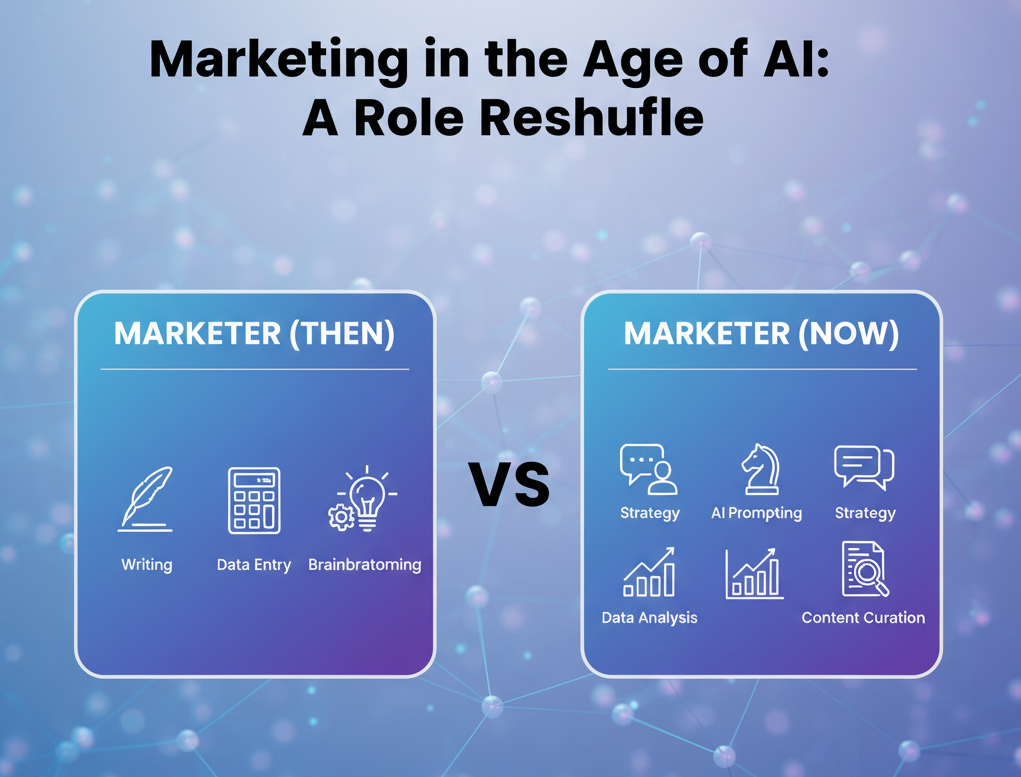
It's the same for a marketer. They can ask an AI to brainstorm 20 ad headlines in 10 seconds. Their job instantly changes from basic writing to high-level strategy, A/B testing, and picking the one headline that will actually connect with a human audience.
The "Task Taker": Automating the Repetitive
Now, let's be honest: some specific tasks are going away. Things like repetitive data entry, summarizing long reports, and creating standard financial summaries are all perfect jobs for an AI.
But the key word here is tasks, not jobs. The person who used to spend all day on data entry now has the chance to become a data analyzer - the one who asks the AI to find patterns in that data and explain what it means for the business.
The "New Careers": Jobs That Didn't Exist Last Year
This is where it gets really exciting. Entirely new careers are opening up, creating roles that we couldn't have imagined just a few years ago:
- Prompt Engineer: This is basically an "AI translator." It's a person who has mastered the art of asking the AI the perfect questions to get the best, most accurate results.
- AI Ethicist & Auditor: A super important role. This is someone who makes sure AI models are fair, unbiased, and safe for people to use.
- AI Trainer: These are specialists who take a general AI model and fine-tune it for a specific company, like training a legal AI on a law firm's private case history.
The New "Must-Have" Skills for the AI-Powered Workforce
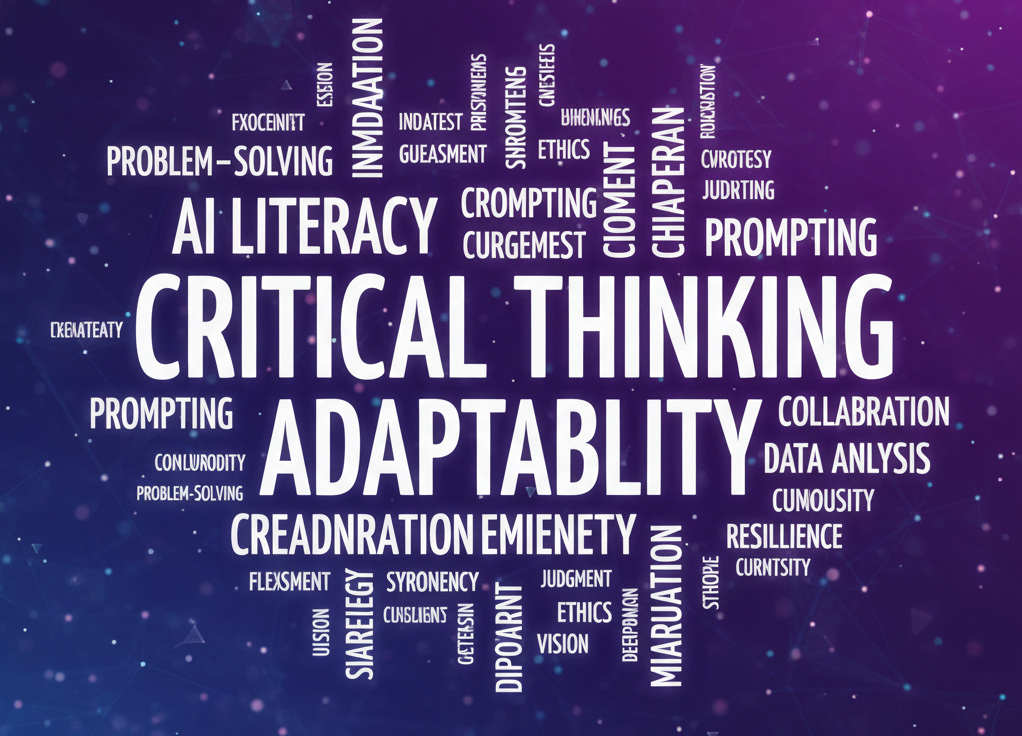
Here's the interesting part: as AI takes over more of the repetitive, technical tasks, our uniquely human skills become more valuable than ever. The new "power skills" are the ones that AI just can't copy.
The "Human-Centric" Power Skills
This is where we'll always have the edge:
- Critical Thinking & Strategic Judgment: An AI can spit out 10 options, but it can't tell you which one is smart for your business, right for your brand, or ethically sound. That takes human wisdom.
- Creativity & Curation: Creativity isn't about starting with a blank page anymore. It's about having the vision, guiding the AI to generate ideas, picking the best bits, and adding that final human spark.
- Emotional Intelligence & Communication: This is the one AI can't touch. Empathy, collaborating with a team, leading a project, and understanding a customer's real frustration - that's all human.
The "New-Collar" Technical Skills
On the technical side, you don't need to be a coder, but you do need to be tech-savvy in a new way:
- AI Literacy: You need to have a basic understanding of what GenAI is, how it works, and (most importantly) what its limits are. Knowing what an "AI hallucination" is and how to spot one is the new essential digital skill.
- Prompt Engineering: This is the most immediate new skill. Learning how to "talk" to an AI to get precise, high-quality results is quickly becoming as fundamental as using a search engine.
Navigating the "Growing Pains": The Challenges We Must Address
This huge shift isn't all perfect. If we want to build a better future with AI, we have to be honest about the challenges and the very real problems we need to solve.
"Getting this transition right means facing the challenges head-on, not just focusing on the cool new tools."
Bias and Fairness
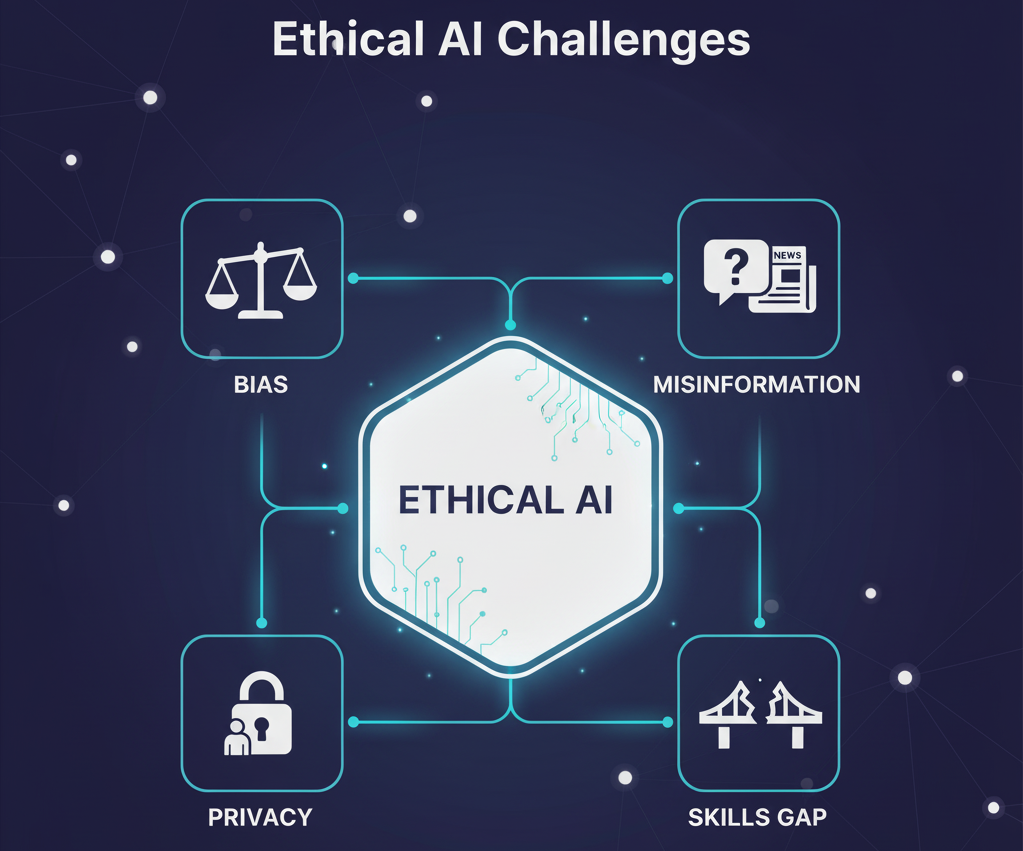
AI models learn from data created by humans, and that data is full of our hidden biases. If our data is biased (and it often is), the AI will be biased too. This can lead to very unfair outcomes in things like hiring and loan applications.
Misinformation and "Hallucinations"
GenAI can "hallucinate"—which is a polite way of saying it confidently makes stuff up. It can invent facts, sources, and data that sound completely plausible. Our new challenge is learning to verify everything in a world of convincing fakes.
Intellectual Property & Data Privacy
This is a legal and ethical mess right now. Who owns AI-generated art? Was the AI trained on copyrighted work without permission? How do we stop our private company data from being "learned" by a public AI? These are huge questions we're still figuring out.
The Skills Gap & Job Displacement
What happens to the workers whose tasks are automated? This is a real-world problem, not just a theory. It means we have an urgent need for good, accessible retraining and upskilling programs for everyone.
Conclusion: Your Future is Human-Assisted, Not AI-Replaced
So, what's the bottom line? Generative AI is a massive deal, but it's not a replacement for human ingenuity. It's a co-pilot, a powerful tool that helps us by automating tasks, not by replacing people.
This change just makes our most human skills - like critical thinking, creativity, and empathy - more important than ever.
The future of work doesn't belong to AI. It belongs to those who know how to use AI.
The best strategy isn't to try and compete with it. It's to learn how to collaborate with it. If there's one takeaway, it's this: the most important skill is being a lifelong learner.